
Home | Personal Advice | Banking | Checking and Savings
Interest Rate Risk
The changing interest rate environment has led many people to review their borrowing options and take advantage of lower rates. The impact of these lower rates is also evident as individuals invest in or renew CDs. Lower borrowing rates have been matched by lower rates on savings accounts and CDs. Borrowers are happy, but savers are less pleased.
What is interest rate risk?
One less-known effect of changing interest rates is how they influence the value of fixed income investments. This is called interest rate risk. When interest rates increase, the values of fixed-income investments like bonds decrease. Conversely, when interest rates decline, bond values rise.
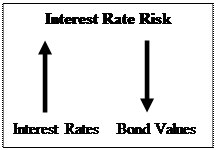
This occurs because bond values are determined by the marketplace. Thousands of traders and investors are continually buying and selling bonds. The prices they buy and sell at depend on the current interest rate environment.
The amount by which bond values rise or fall mainly depends on the bond’s maturity. The longer the maturity, the more its value will fluctuate when interest rates change. For short-term bonds, like 90-day Treasury Bills, the impact of rate changes is very minimal.
For a 30-year Treasury Bond, a 1% rise in interest rates can lead to as much as a 12% drop in its value. A 2% increase might cause a 22% decrease. If interest rates fall, bond prices will go up, but not necessarily by the same percentages because of how present value calculations work.
If you include bonds (or other fixed income investments) in your portfolio, you should understand that their values can fluctuate with changes in interest rates.
How should you consider interest rate risk in your investment strategy?
- Just be aware that long-term bonds can and do rise and fall in value.
- If you expect to need funds that you want to dedicate to fixed income investments, keep the maturities short so unexpected changes in interest rates do not have as much of an effect. For example, for very short-term needs, a 90-day Treasury Bill may be attractive.
- If you buy Certificates of Deposit, you can avoid the fluctuation, but you may lose some interest if you redeem them before their maturity.
- Finally, be aware that the market forces that cause bond values to rise and fall also affect fixed-income mutual funds. The portfolio manager may seek to mitigate risk through various hedging strategies, but the value of these mutual funds fluctuates. When evaluating fixed-income mutual funds, consider the portfolio’s average maturity and be cautious of claims that hedging strategies can eliminate interest rate risk.
Summary
Interest rate risk is just one factor to consider when building your portfolio. Choosing shorter-term bonds can reduce this risk, but it should be weighed equally with the quality of the issuing institution.